
An Act of Random kindness can create big change. But if we want lasting change, we must also understand the root causes of unfairness. One of those causes is food inequality, because the food people eat can directly affect brain health.
The brain is one of the most energy-demanding organs in the body. It needs a steady supply of nutrients to think, learn, remember, and stay emotionally balanced. When people do not have access to healthy food, their brain health can suffer over time.
What Is Neurological Disparity?
A neurological disparity is an unfair difference in brain health between groups of people. This can happen when some communities have better access to nutritious food, while others do not.
In simple terms, if one group can regularly eat foods that support the brain and another group cannot, the health gap between them can grow. Over time, this can affect memory, attention, mood, and the risk of brain-related disease.
How Food Affects Brain Health
Food does more than provide energy. It helps protect and support the brain.
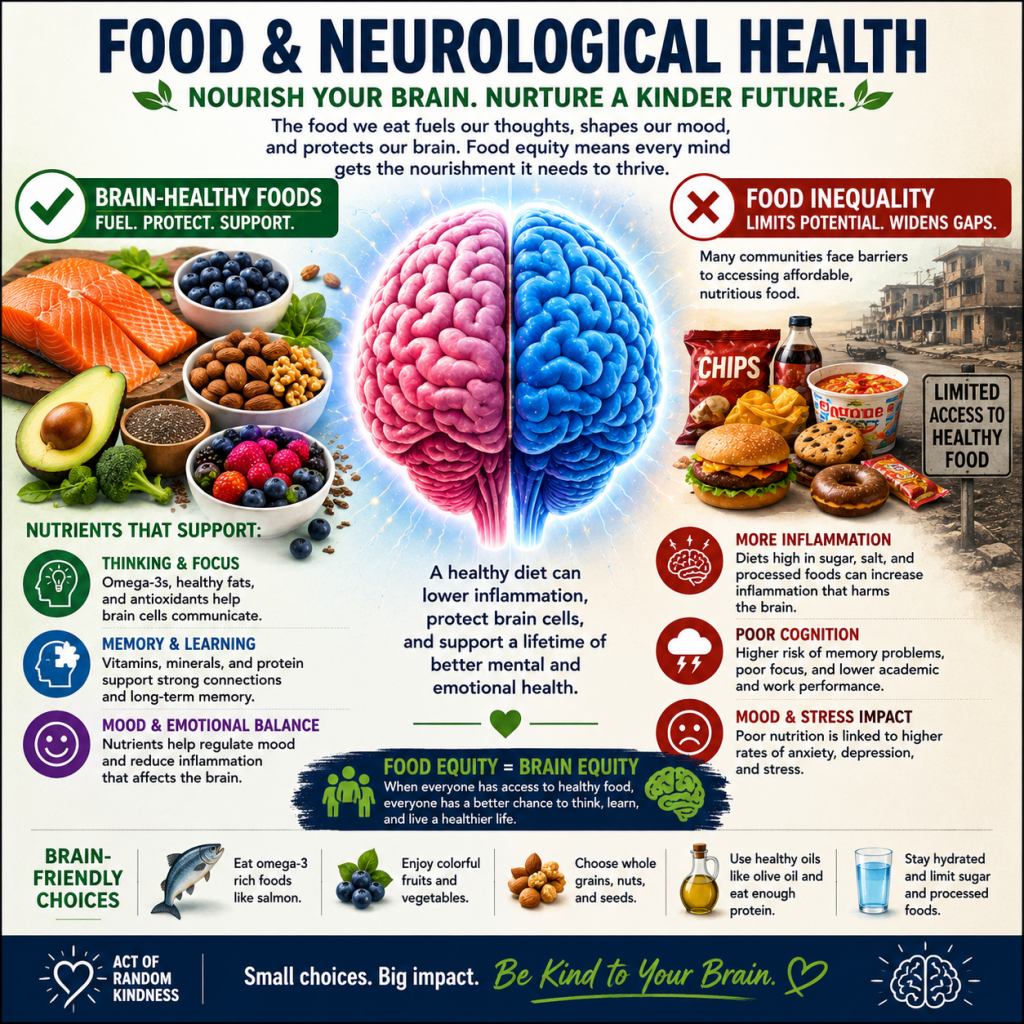
The brain needs nutrients such as omega-3 fatty acids, antioxidants, vitamins, minerals, protein, and healthy fats. These nutrients help brain cells communicate, reduce damage, and support clear thinking.
When a person eats mostly processed foods, sugar, and refined carbohydrates, the body may become more inflamed. Chronic inflammation can affect the brain and may contribute to memory problems, poor focus, and neurological disease.
Why Food Inequality Becomes a Brain Health Problem
Not everyone has the same access to healthy food. Some neighborhoods have fewer grocery stores, higher food costs, or limited transportation. Because of this, many families depend on cheaper foods that are often less nutritious.
This is where food inequality becomes a neurological disparity. If some people can eat brain-supportive foods every day and others cannot, their long-term brain health may look very different.
Foods That Support Brain Health
A brain-healthy diet often includes:
- Fatty fish and other omega-3 sources.
- Fruits and vegetables rich in antioxidants.
- Whole grains.
- Beans, nuts, and legumes.
- Healthy fats and enough protein.
These foods support the brain’s structure and help it work more efficiently. Research suggests that healthy eating patterns may lower the risk of cognitive decline and support better brain health over time.
Why This Topic Matters
Brain health should not depend on income, zip code, or food access. When healthy food is expensive or hard to find, people may face not only physical health risks but also cognitive and emotional risks.
This is why food equity matters. If we want healthier brains, we need healthier food systems that give everyone a fair chance to thrive.
Conclusion
Food and nutrition are deeply connected to neurological health. When communities lack access to nutritious food, they may face a greater risk of brain-related problems. That is why food equity is not just a nutrition issue — it is a brain health issue too.
Resources
- NIH News in Health: Healthy Eating Linked to Better Brain Health
- American Heart Association: Food for thought: How diet affects the brain over a lifetime
- Harvard Health: Nutritional psychiatry: Your brain on food
- NIH/PMC: Inflammation and Insulin Resistance as Risk Factors and Potential Mechanisms
- NIH/PMC: The brain as an insulin-sensitive metabolic organ
- NIH/PMC: Potential Neuroprotective Effects of Dietary Omega-3 Fatty Acids on Alzheimer’s Disease