
Gluten, Brain Health, and Neurological Disparities
Hi, and welcome back to Act of Random Kindness. We often talk about kindness to others, but today we are focusing on a different kind of kindness: protecting your own brain. Food choices can affect more than the stomach. They can also play a role in brain health and, in some cases, contribute to neurological disparities.
Many people think gluten is only a problem for people with celiac disease. Celiac disease is an autoimmune condition in which the immune system reacts to gluten and can damage the small intestine. But some people who do not have celiac disease still report symptoms after eating gluten, especially symptoms like headaches, brain fog, fatigue, or mood changes. That does not mean gluten harms everyone the same way, but it does show that the brain and digestive system are closely connected.
How Gluten Can Affect The Brain
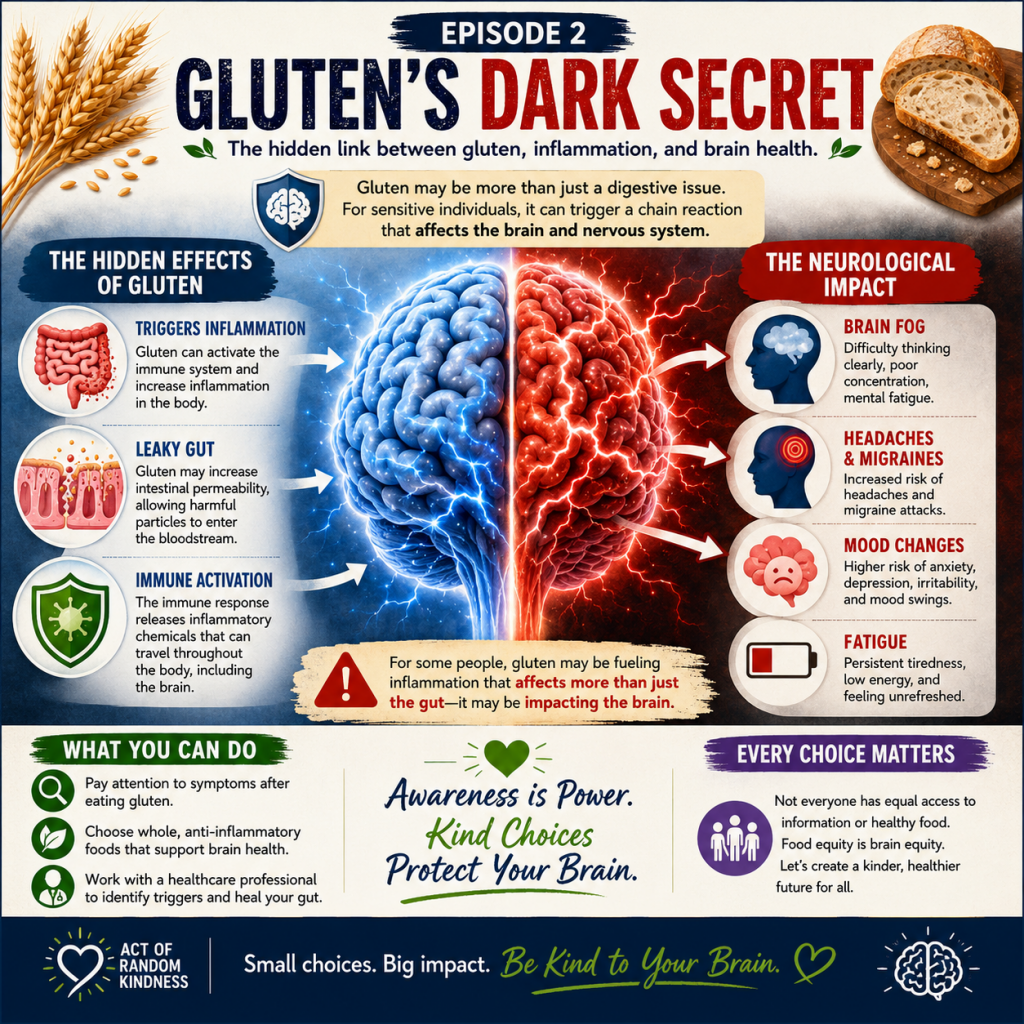
For some sensitive individuals, gluten may trigger inflammation in the body. Inflammation is the body’s way of responding to something it sees as harmful, but when that response becomes chronic, it can create problems. In the gut, gluten may contribute to increased intestinal permeability, sometimes called “leaky gut,” where the intestinal lining becomes more porous than it should be.
When that happens, partially digested particles may pass into the bloodstream and trigger an immune response. The immune system then releases inflammatory chemicals that can circulate through the body. Some of those chemicals may affect the brain and contribute to neuroinflammation, which means inflammation in brain tissue itself.
Why This Matters For Neurological Disparities
Neurological disparities are differences in brain health that affect some groups more than others. These disparities can show up as higher rates of migraines, anxiety, memory problems, fatigue, and difficulty concentrating. If someone’s diet repeatedly triggers inflammation, that person may face more neurological symptoms over time.This matters because food access, food quality, and health awareness are not equal for everyone. Some people have the resources to test dietary changes, get medical guidance, and choose gluten-free options more easily. Others may not. That means the effects of food-related brain issues can become part of a bigger health inequality.
Supporting Evidence
Research has linked inflammation and immune activity to neurological symptoms in sensitive people. Studies have also examined how gluten-related disorders can affect the nervous system, not just the digestive system. For people with celiac disease, a strict gluten-free diet is the standard treatment, and it can improve symptoms and protect health. For people without celiac disease but with possible gluten sensitivity, dietary changes should be approached carefully and ideally with a clinician’s guidance.
It is also important to be honest about what the evidence does and does not say. Gluten is not automatically harmful to everyone, and not every headache or brain fog symptom is caused by gluten. But for some people, especially those with celiac disease or gluten sensitivity, gluten may be part of the problem.
A Brain-Friendly Approach
If someone notices ongoing headaches, anxiety, brain fog, or fatigue after eating gluten, a short trial of gluten removal may help clarify whether there is a connection. That said, any major diet change should be done in a thoughtful way so the person still gets enough fiber, protein, vitamins, and minerals.
A brain-supportive diet usually includes healthy fats, vegetables, fruits, lean proteins, nuts, seeds, and whole foods that support stable energy. The goal is not fear. The goal is awareness. When you understand how food affects your body and brain, you can make choices that support long-term health.
Conclusion
Gluten is not a problem for everyone, but for some people it may contribute to inflammation, gut stress, and neurological symptoms. That is why food and brain health are linked, and why unequal access to information and healthy food can become a neurological disparity. Protecting brain health is an act of kindness to yourself.
Resources
Here are supporting sources you can place at the bottom of the blog:
- NIH: Celiac Disease and the Nervous System
- NIH/PMC: The Role of Nutrition in Neurological Disorders
- NIH/PMC: Gluten and the Brain: Neurological Effects of Gluten-Related Disorders
- Harvard Health: Nutritional psychiatry and brain health
- NIH News in Health: Healthy Eating Linked to Better Brain Health
- NIH/PMC: Inflammation and Insulin Resistance as Risk Factors and Potential Mechanisms