
Sugar, Fat, and Brain Health: What You Need to Know
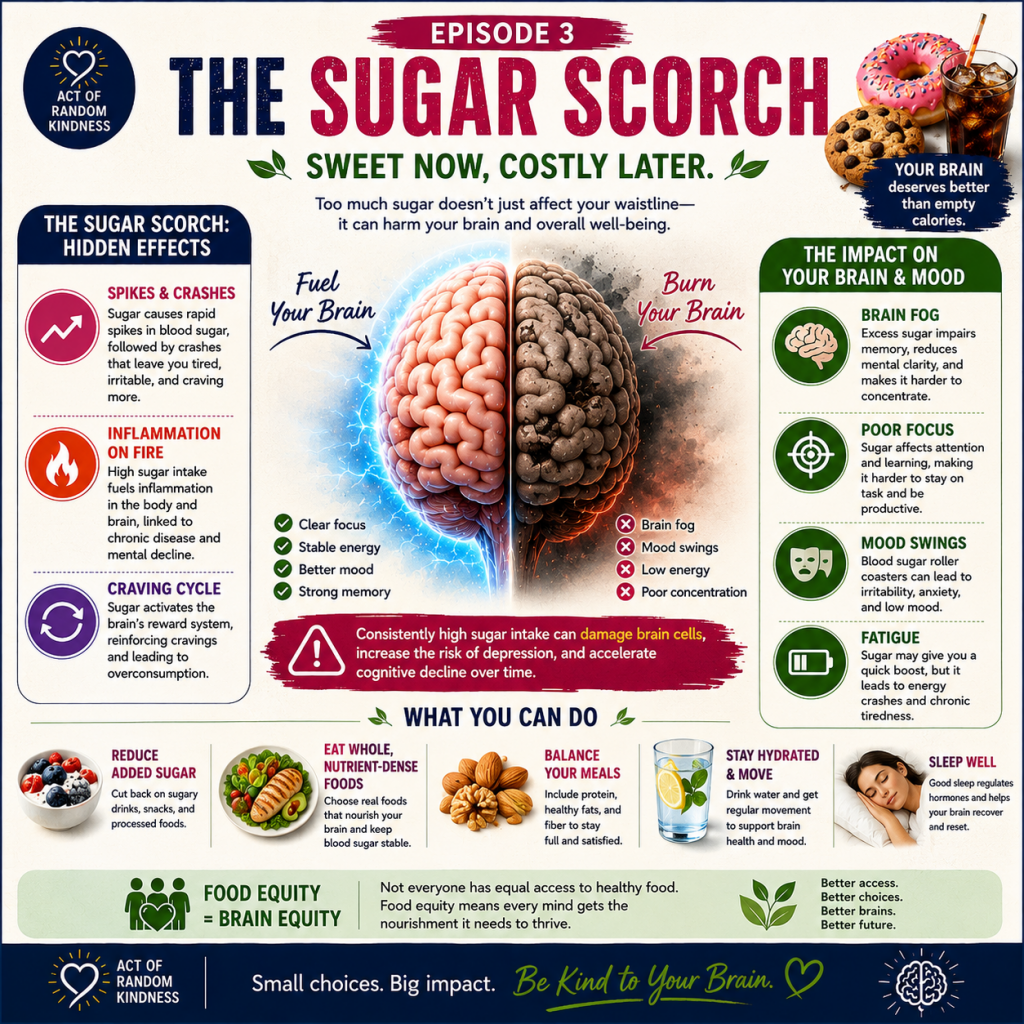
Welcome to Act of Random Kindness. Today, we are sharing life-changing information from Dr. David Perlmutter’s Grain Brain and his ideas about how diet can affect brain health. The big message is simple: the real problem may not be fat, but too much sugar and too many refined carbohydrates.
For years, people were told to fear fat, especially saturated fat. But growing research shows that high blood sugar, insulin resistance, and chronic inflammation may play a much bigger role in brain decline than healthy fat does. That matters because brain health is not equal for everyone, and diet-related harm can deepen neurological disparities.
Why Sugar Matters More Than Fat
When you eat a diet high in carbohydrates and sugar, blood sugar rises quickly. The body responds by releasing insulin to control that sugar. Over time, frequent sugar spikes can lead to insulin resistance, which means the body no longer responds to insulin as well.
This is important for the brain because insulin does more than regulate blood sugar. Brain insulin signaling helps support energy use, memory, and cell function. When that system stops working properly, the brain may not get the energy it needs to function at its best.
The Brain and “Type 3 Diabetes”
Some researchers refer to Alzheimer’s disease as “type 3 diabetes” because of the link between insulin resistance and cognitive decline. In simple terms, the brain may struggle to use glucose properly, even when there is enough sugar in the body.
That can leave brain cells under stress. Over time, this may contribute to memory loss, poor concentration, and faster decline in thinking skills. While this idea is still being studied, the connection between metabolism and brain health is becoming harder to ignore.
Why Healthy Fat Can Help
The brain can also use fat-derived fuel called ketones. Ketones are made when the body uses fewer refined carbs and more healthy fats. Supporters of low-carb, high-fat eating believe ketones may provide a cleaner, steadier fuel source for the brain than sugar-heavy diets.
Healthy fats are found in foods like:
- Avocados.
- Olive oil.
- Nuts and seeds.
- Fatty fish.
- Coconut oil in moderation.
These foods may help support energy stability, reduce inflammation, and protect brain cells from oxidative stress. That does not mean every person needs the same diet, but it does show that fat is not automatically the enemy.
What to Limit
A brain-supportive approach usually means cutting back on foods that cause frequent blood sugar spikes. These include:
- Sweetened drinks.
- Candy and desserts.
- Bread and pasta made from refined flour.
- Sugary breakfast cereals.
- Packaged snack foods high in refined carbs.
Eating these foods once in a while is different from relying on them daily. The concern is long-term, repeated exposure to sugar and refined carbohydrates, which may contribute to inflammation and insulin resistance.
Brain Health and Disparity
This topic also connects to neurological disparities. Not everyone has equal access to fresh foods, nutrition education, or medical support. People in under-resourced communities may rely more often on cheaper, processed foods that can worsen metabolic health over time. That means diet-related brain problems may hit some groups harder than others. When healthy food is harder to access, the risk of memory problems, mood changes, and cognitive decline can grow. Food equity is therefore part of brain equity.
Conclusion
The kindness you show your brain begins with what you eat. Reducing sugar and refined carbs while choosing healthy fats may help support memory, mood, and long-term brain health. The goal is not fear. The goal is to understand how food shapes the brain and to make choices that support lifelong health.
Resources
- NIH News in Health: Healthy Eating Linked to Better Brain Health
- NIH/PMC: From Metabolism to Mind: The Cardio–Metabolic–Brain Axis
- NIH/PMC: Brain Insulin Resistance and Cognitive Function
- NIH/PMC: Expanding the Understanding of Insulin Resistance in Brain Health
- NIH/PMC: The Role of Omega-3 Fatty Acid Supplementation in Slowing Cognitive Decline
- NIH/PMC: Potential Neuroprotective Effects of Dietary Omega-3 Fatty Acids on Alzheimer’s Disease